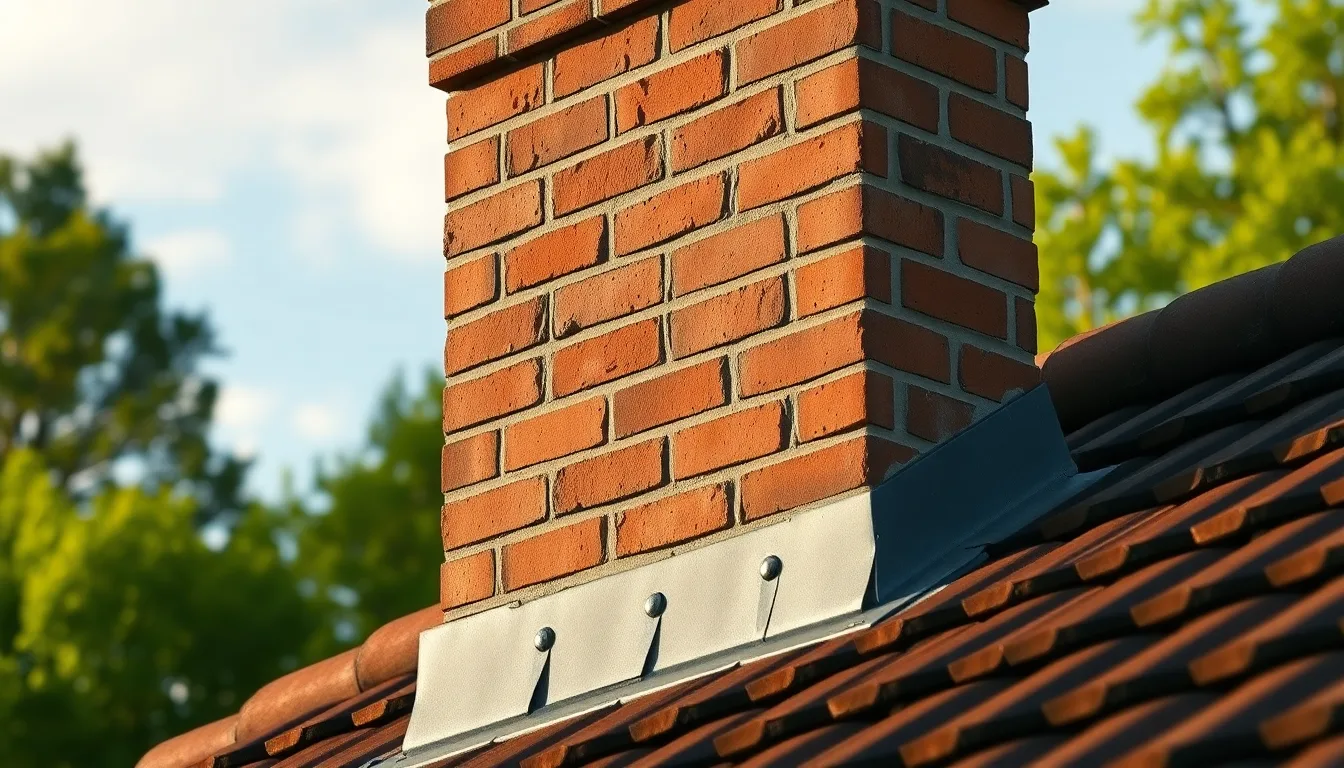
Lead flashing is a part of the roof most homeowners never think about. Yet it quietly does some of the most important waterproofing work on the whole structure. In simple terms, flashing is a strip of material — almost always lead on a traditional UK roof — that seals a gap. That gap is wherever the roof covering meets something else, like a chimney stack, a wall, a dormer window, or a roof valley.
Where you’ll find it
Tiles and slates are excellent at shedding water on their own. But they can’t seal themselves against a vertical surface such as a chimney or a wall. That’s the job flashing does. On a typical Hertfordshire semi, you’ll usually find lead flashing:
- Around the base and sides of a chimney stack — the “step and apron flashing”, meaning the lead pieces stepped into the brick joints and dressed over the roof tiles below
- Where a roof slope meets a wall, such as at the side of an extension
- In valleys, where two roof slopes meet and water volume is highest
- Around dormer windows and roof lights
Why lead specifically
Builders have used lead for this job for centuries. It’s soft enough to be dressed tightly around awkward shapes. Yet it’s tough enough to last many decades once fitted correctly. It also expands and contracts gently as temperatures change, rather than cracking. That means it copes well with a British winter’s freeze-thaw cycles — the repeated freezing and thawing of trapped moisture that can crack more brittle materials. Cheaper alternatives do exist. However, for chimney and valley work especially, lead remains the standard that most surveyors and mortgage valuers expect to see.
Warning signs flashing has failed
A leak around a chimney breast often signals a flashing problem, not faulty tiles. The same goes for a leak at the top of a wall where it meets a sloping roof, or inside a loft near a valley. Common causes include the lead lifting away from the mortar joint, splits from movement over time, or flashing that was never fitted correctly in the first place. The damage is often hidden behind a chimney breast or in a loft space. So a slow flashing leak can go unnoticed for a while, and some timber damage may already have happened by the time it marks a ceiling.
Repair or renew?
A small section of lifted flashing can usually be re-dressed and re-pointed at reasonable cost. But sometimes the lead itself has split, thinned or corroded. Or a previous repair may have used the wrong material, such as bitumen-based flashing tape. In those cases, we’d generally recommend renewing the section properly in lead rather than patching it again. Our chimney & lead work service page covers this in more detail. And if you’re weighing up a repair against a bigger job, our repair or replace guide explains how we make that call generally.
Three generations of lead work
Lead work is a genuine craft skill. It’s one of the trades we’ve kept alive as a family firm since 1947. It takes practice to dress lead correctly around an awkward chimney or valley, and any shortcuts show immediately. It’s just one of the services we offer alongside re-roofing, repairs and loft work. Would you like a survey of your flashing? Whether you’re in Hoddesdon, Cheshunt, Hertford or elsewhere across our service area, just get in touch through our contact page.
Further reading
- Roofing Homes in Broxbourne
- New Roofs and Re-Roofing in Cheshunt
- Roofing Victorian Terraces in Enfield
- How Much Does a New Roof Cost in Hertfordshire?
- Flat Roof Materials Compared
- Why Choose a Family Roofing Firm?
- Roofing Hertford’s Period and New-Build Homes
- Choosing a Roofer in Hoddesdon
- Roofing Grants and Help Paying for Roof Repairs
- Dormer vs Velux Loft Conversions Explained
- How Long Does a Slate Roof Last?
- Repair or Replace? Signs Your Roof Needs Replacing