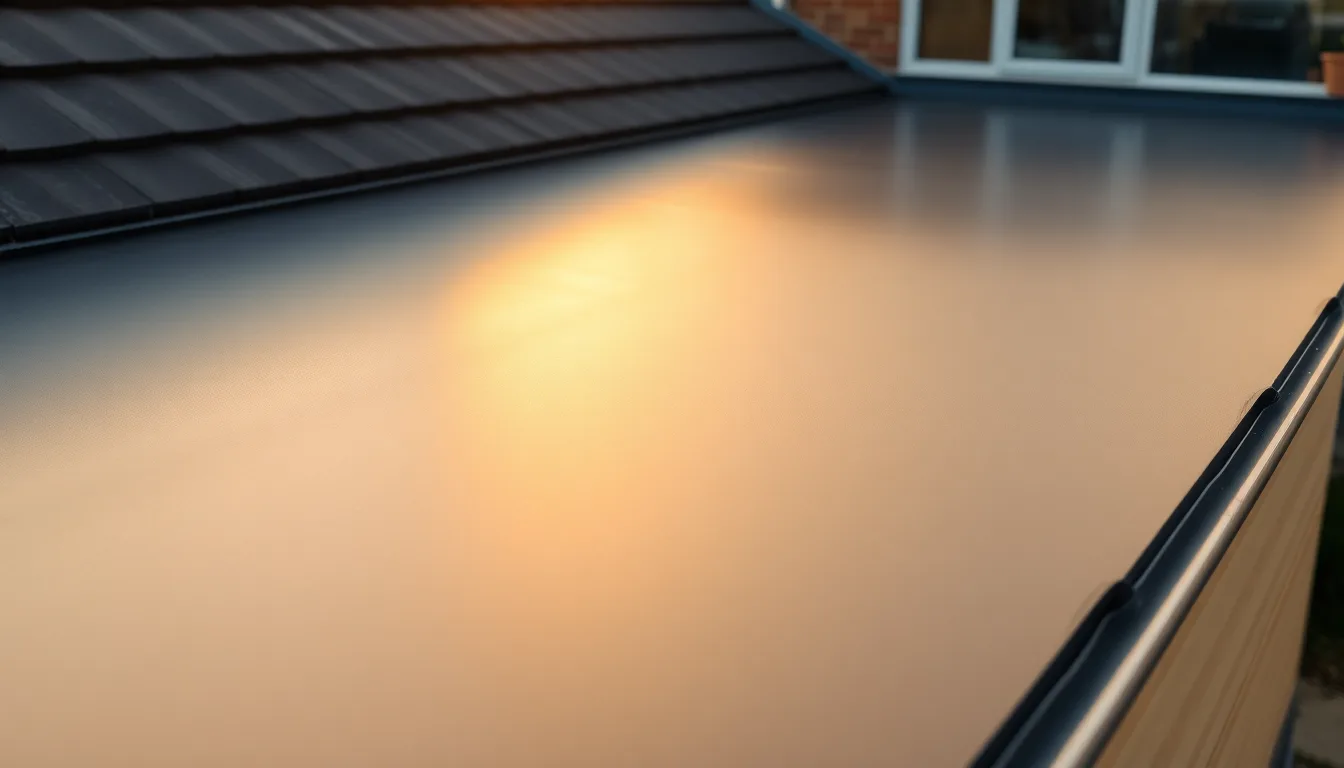
Most flat roof extensions, garages and dormers in Hertfordshire were originally covered in one of three materials: traditional felt, mastic asphalt, or — on newer work — single-ply membrane such as EPDM rubber (a synthetic rubber roofing sheet). If you’re replacing a failing flat roof, it’s worth understanding what each option actually offers, rather than simply matching what was there before.
Traditional felt
Older bitumen felt roofs were usually laid in two or three layers with a mineral or chipping finish. They were the standard choice for decades. They’re still common on Hoddesdon and Cheshunt extensions built before the 2000s. But standard felt has a shorter working life than the newer alternatives. It’s also prone to splitting and blistering once it starts to age, particularly around edges and upstands. High-performance torch-on felt systems improved on this a lot, and remain a reasonable budget option. Still, they don’t match single-ply membrane for long-term reliability.
Mastic asphalt
Mastic asphalt is applied hot as a molten, seamless coating rather than laid in sheets. This makes it genuinely watertight, with no joints to fail. It has a long track record on flat and slightly pitched roofs, and can last several decades when properly maintained. However, it’s a specialist trade. It’s more labour-intensive to install, and so one of the more expensive options. It’s often still specified on larger commercial-style flat roofs, and on older properties being restored to match the original method.
Single-ply EPDM
EPDM is a synthetic rubber membrane supplied in large sheets, with far fewer joints than felt. That’s one reason it’s become the default choice on new flat roof work. Manufacturers commonly offer warranties around 20 years or more. In practice, a well-installed EPDM roof often outlasts that. It’s flexible enough to cope with a building’s normal movement without cracking. And because it’s fitted in large sheets rather than several felt layers, there’s less that can go wrong at the joints — usually the weak point on an older felt roof.
Which one for your roof?
For a straightforward flat roof replacement on a house extension, garage or dormer cheek, single-ply EPDM is generally our default recommendation today. It has the best balance of cost, longevity and low maintenance for most domestic jobs. Mastic asphalt still earns its place on larger or more complex roofs, though, or where a heritage property needs a historically accurate finish. Felt remains the lowest up-front cost, which can make sense on a short-term structure. Still, it’s rarely the best long-term value, once you account for how much sooner it typically needs replacing.
If you’re not sure whether your current flat roof needs full replacement or just a repair, our flat roofs service page and our guide on repair versus replace are good next steps. And if the roof in question is a home extension you’re planning rather than replacing, our loft conversion and extensions guide covers the roofing side of that too.
Signs it’s time to replace, not patch
- Ponding water that doesn’t drain within 24-48 hours of rain
- Visible cracking, blistering or lifting at joints and upstands
- Repeated leaks in different spots each time it’s patched
- A felt roof that’s noticeably past 15-20 years old
We cover flat roof replacement and repair across Hoddesdon, Cheshunt, Broxbourne and the rest of our service area. Get in touch through our contact page for a free, no-obligation look at your roof.
Further reading
- Roofing Homes in Broxbourne
- New Roofs and Re-Roofing in Cheshunt
- What Is Lead Flashing and Why It Protects Your Roof
- Roofing Victorian Terraces in Enfield
- How Much Does a New Roof Cost in Hertfordshire?
- Why Choose a Family Roofing Firm?
- Roofing Hertford’s Period and New-Build Homes
- Choosing a Roofer in Hoddesdon
- Roofing Grants and Help Paying for Roof Repairs
- Dormer vs Velux Loft Conversions Explained
- How Long Does a Slate Roof Last?
- Repair or Replace? Signs Your Roof Needs Replacing