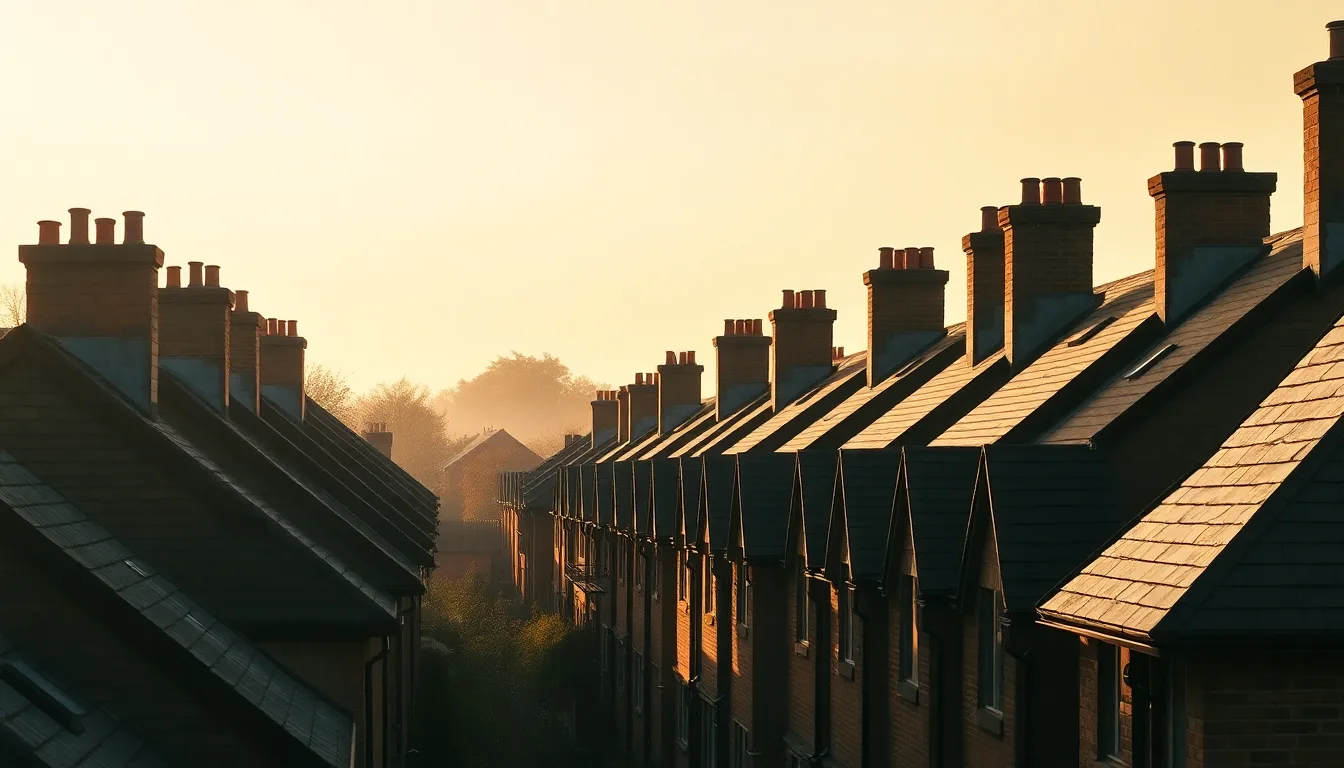
Enfield has some of the oldest housing stock we cover. Whole streets of Victorian and Edwardian terraces sit close to the town centre. These roofs were often built with natural slate, which is excellent material. However, many are now well over a century old and have had a mix of repairs, re-tiles and loft conversions over the decades. So that patchwork history makes an Enfield terrace roof a genuinely different job to survey than a 1980s estate house.
Original slate versus later repairs
It’s common to find sections of original Welsh slate still in place. These sit mixed in with later concrete tile repairs, where individual slates were replaced with whatever was available at the time. Original slate, if it’s still sound, can often last considerably longer with proper maintenance. So we always check what’s genuinely salvageable before recommending a full re-roof. Our slate roof lifespan guide explains what determines how much life is left in an older slate roof.
Party walls and shared flashing
Because terraces share party walls, the flashing where neighbouring roofs meet is a common source of leaks. It can also be tricky to diagnose. A leak on your side of the wall doesn’t always mean the fault is on your own roof. Sometimes water is tracking along a poorly maintained parapet or party-wall flashing from next door instead. So we always check this detail specifically on a terrace survey, since guessing wrong here means fixing the wrong thing. Our lead flashing guide explains what this kind of flashing does and why it fails.
Loft conversions and ventilation
Many Enfield terraces have had a loft conversion added at some point. Older conversions in particular sometimes lack adequate roof ventilation. Without it, condensation can build up in the roof void and cause timber to rot from the inside. That’s a very different problem to a leak from outside, and it can be missed on a quick inspection. If you’re planning a conversion or reviewing an older one, our dormer vs Velux loft conversion guide is a useful starting point.
What we recommend for an older terrace
- A proper survey before assuming a full re-roof is needed — much of the original slate may still be sound
- Specific attention to party-wall and valley flashing, since this is where terrace leaks most often start
- A check of loft ventilation, particularly if a conversion has already taken place
- Honest advice on whether a repair, a partial re-slate, or a full re-roof is the right call
Because we’ve been in this trade since 1947, we’ve handled a great many roofs of exactly this age and type. So we know what to look for that a newer firm might miss. If you own a period property in Enfield, get in touch through our contact page for a survey. We also cover nearby Waltham Cross and Cheshunt — see our full areas we cover list — and our full roof repairs service covers everything from a single slipped slate to a full re-slate.
Further reading
- Roofing Homes in Broxbourne
- New Roofs and Re-Roofing in Cheshunt
- Flat Roof Materials Compared
- Why Choose a Family Roofing Firm?
- Roofing Hertford’s Period and New-Build Homes
- Choosing a Roofer in Hoddesdon
- Roofing Grants and Help Paying for Roof Repairs
- Dormer vs Velux Loft Conversions Explained
- How Long Does a Slate Roof Last?
- How Much Does a New Roof Cost in Hertfordshire?
- Repair or Replace? Signs Your Roof Needs Replacing