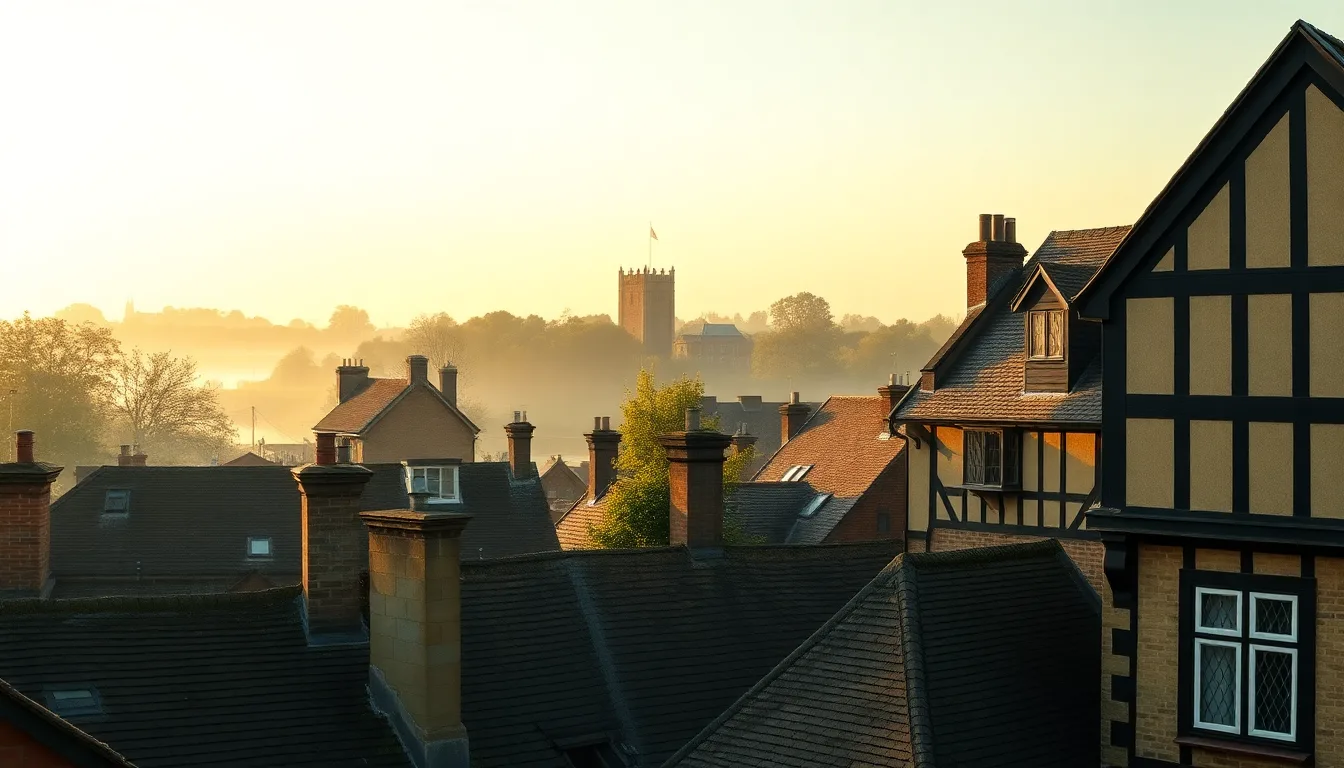
Hertford is one of the more architecturally mixed towns we cover. It’s a genuine county town, with Georgian and Victorian buildings close to the centre, Edwardian terraces further out, and newer estate housing on the edges towards Ware and Hertford Heath. Because of that mix, a “typical” Hertford roof survey can throw up quite different issues, depending on which part of town a property sits in.
Town-centre period properties
Older buildings near Hertford’s centre need a different approach to a newer estate house. Some are timber-framed, and many have natural slate or clay tile roofs dating back well over a century. But maintained original slate can often still have decades of life left in it. Our guide on how long a slate roof lasts explains what determines that. Conservation area rules also apply to a number of streets in central Hertford. These can affect which materials and rooflines are allowed on a re-roof. So it’s worth checking with Hertfordshire’s planning department, before assuming any job is straightforward permitted development.
Edwardian and inter-war terraces
Moving slightly further out, Hertford has plenty of Edwardian and 1930s terraced and semi-detached housing. Builders typically built these roofs to a standard timber structure of their era. Common issues we see include felt and batten failure, where the original underlay has simply reached the end of its life. We also often find chimney flashing nobody has properly renewed since the original build. Our lead flashing guide explains what to look for, if you suspect this is the source of a leak.
Newer estate housing
On newer developments towards the edge of town, roofs are generally in better structural condition. Still, they sometimes show poor workmanship from the original build: badly cut tiles around valleys, inadequate ventilation, or flashing that was fitted quickly rather than properly dressed. These issues rarely cause immediate problems. But they tend to surface as leaks five to fifteen years after the property was built, once minor defects have had time to worsen.
What we check on a Hertford survey
- Slate or tile condition and how much genuine life is left versus what’s been patched
- Chimney and valley flashing, especially on Edwardian and inter-war properties
- Roof ventilation on newer builds, to rule out condensation-related timber problems
- Whether any conservation area restrictions apply before recommending materials
Whether you’re in a Georgian terrace near the town centre or a newer estate on the outskirts, get in touch through our contact page for an honest survey with our roof repairs team. We also cover neighbouring Ware and Cheshunt, and the full list of towns is on our areas we cover page.
Further reading
- Roofing Homes in Broxbourne
- New Roofs and Re-Roofing in Cheshunt
- What Is Lead Flashing and Why It Protects Your Roof
- Roofing Victorian Terraces in Enfield
- How Much Does a New Roof Cost in Hertfordshire?
- Flat Roof Materials Compared
- Why Choose a Family Roofing Firm?
- Choosing a Roofer in Hoddesdon
- Roofing Grants and Help Paying for Roof Repairs
- Dormer vs Velux Loft Conversions Explained
- How Long Does a Slate Roof Last?
- Repair or Replace? Signs Your Roof Needs Replacing